Everyone likes to think of their garden as a private, secluded space, but it can be hard to make that a reality, particularly in built-up areas. If the sights and sounds of other people have taken you out of relaxation mode one too many times, you’re ready for these fast-growing hedges for privacy in your garden.
Quick answer: The fastest-growing hedge for privacy in the UK is leylandii, which can grow up to 90cm a year. For a more manageable evergreen screen, choose cherry laurel (up to 60cm a year), photinia Red Robin or griselinia. All three reach a 1.8m fence-height screen in about 3 to 4 years from small plants. For a low maintenance hedge at the front of a house, choose privet, griselinia or holly.
Why plant hedges in your garden?
Hedges come with a whole host of benefits for your outdoor space.
- They offer privacy (obviously!)
- Certain kinds grow very quickly
- They’ll absorb noise from the other side
- Hedges reduce the pollution that reaches you
- They make excellent wind barriers
- Maintained hedges will typically last much longer than a fence
- You’ll get extra greenery in your garden
- They can hide ugly buildings or walls
- Certain varieties can be used for garden security
- Hedges are a wonderful habitat for wildlife, promoting biodiversity
If you’ve already checked out our garden fence ideas and have looked at other ways to reduce traffic noise, maybe a hedge is what you need. Let’s look at some varieties of fast-growing hedges for privacy in your garden, and then we’ll move on to some planting tips to get you going.
Fast-Growing Hedges for Privacy in Your Garden
So, without any further fuss here are some of the best hedges for privacy and noise control outdoors.
Fast-growing hedges compared
| Hedge | Growth per year | Evergreen | Best for | Trimming |
|---|---|---|---|---|
| Leylandii | Up to 90cm | Yes | Tall screens, fast | 2 to 3 times a year |
| Cherry laurel | Up to 60cm | Yes | Dense screens, shade | Once or twice a year |
| Photinia Red Robin | 30 to 60cm | Yes | Colour and privacy | Twice a year |
| Griselinia | 30 to 60cm | Yes | Front gardens, coastal gardens | Once a year |
| Privet | 30 to 60cm | Mostly | Formal front hedges | 2 to 3 times a year |
| Pyracantha | 30 to 60cm | Yes | Security, wildlife | Once or twice a year |
| Bay laurel | About 40cm | Yes | Mediterranean style | Once or twice a year |
| Bamboo (clumping) | Varies | Yes | Narrow spaces | Thin out yearly |
| Holly | About 10cm | Yes | Low maintenance, security | Once a year |
1. Leylandii

Leylandii is usually the first type of plant people think of when they picture a fast-growing hedge, so let’s talk about it right off the bat. Leylandii is good for providing a tall, dense screen, and it gets very tall. It can grow up to 90cm in a year, so you really need to be on top of your maintenance with this kind of hedge.
Leylandii is absolutely one of the best fast-growing hedges for privacy, but its maintenance and management requirements may mean it’s not the best choice specifically for you. Left untrimmed it can reach 30m, and it does not regrow if you cut back into old brown wood. Leylandii is also the hedge most often involved in high hedge complaints to councils (see the hedge laws section below).
2. Pyracantha
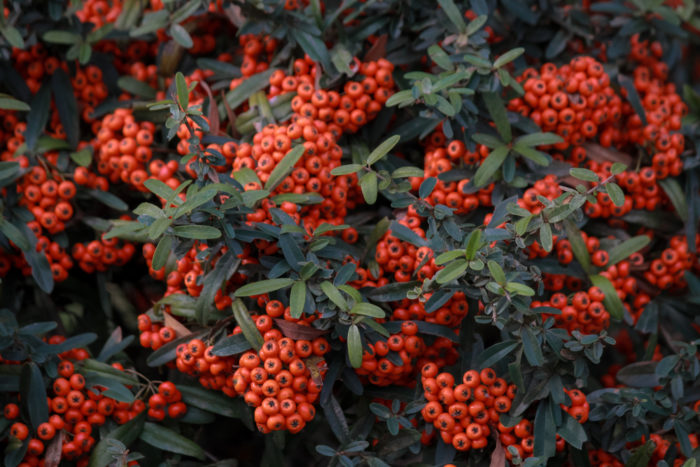
Pyracantha is a hard-working hedge that ticks a lot of boxes. Its evergreen leaves are home to beautiful white flowers in spring, and fiery red berries in autumn… and 2.5cm long spikes year-round, making it an excellent choice for garden security.
Pyracantha grows between 30-60cm each year, and is suited to sun or partial-sun (see more plants for shade gardens here), and most soil types as long as it doesn’t become waterlogged. Once it’s become established, it’s an ideal nesting spot for birds and local wildlife, too.
3. Holly

Holly is another hedge that’s good for security as well as privacy. However, it’s a relatively slow-grower compared to the other hedges on this list, and will only expand by about 10cm each year. It’s a perfect choice if you want a low-maintenance garden, but it might not be the right choice if you’re in a hurry and don’t want to fork out for a larger plant.
Holly is also one of the best low maintenance hedges for the front of a house, because it only needs trimming once a year.
Holly berries are great for wildlife gardens as they attract lots of birds, plus you’ll have a head start on making your home and garden ready for Christmas.
4. Privet

Privet is a fantastic choice for boosting your curb appeal and making your front garden look tidy and classy. It’s best pruned into formal shapes. Take a look at our French garden post for some ideas! In more good news, privet is very tolerant to pollution, so you should be able to enjoy it even in urban gardens.
You can expect a privet hedge to grow between 30-60cm in a year, so you’ll be trimming it regularly. It’s a really beautiful hedge for anyone that takes pride in a crisp, manicured outdoor space.
5. Bamboo

How about a twist on the idea of a hedge? Bamboo looks stunning and can easily be used as a visual screen. Its narrow shoots take up very little space, and lend a tropical feel, or relaxing ambience to your garden, depending on how you style it. Golden bamboo or fountain bamboo are the best varieties for creating privacy.
6. Bay laurel

Bay laurel grows at about 40cm a year, and offers thick leaves with a deep green hue and gentle scent. Their pointed leaves were popular in Ancient Greece, and the plant was a symbol of the god Apollo. The shape is still used today, in laurel wreaths associated with achievement, awards and victory.
If you like the relaxed atmosphere of Mediterranean gardens, bay laurel is perfect for an Italian or Greek-inspired space.
7. Cherry laurel

Last on our list, but by no means least, is cherry laurel. Cherry laurel grows up to 60cm each year, making it a great option if you’re looking for privacy quickly. It’s an evergreen species and grows well in both shade and direct sunlight, and sprouts pale flowers in spring and dark berries in autumn.
Although it’s an incredibly popular choice for homeowners across the UK, be aware that cherry laurel is toxic to animals. So, if you’re looking for dog-friendly garden ideas, this is definitely one to avoid.
Cherry laurel is one of the cheapest ways to plant a long hedge, as small pot-grown plants are sold in multipacks. Plant them about 60cm apart.

8. Photinia Red Robin
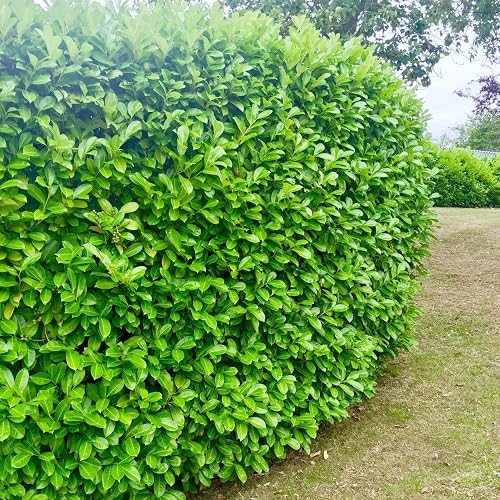
Photinia × fraseri ‘Red Robin’ is an evergreen hedge with bright red new leaves in spring that turn deep green over summer. Red Robin grows 30 to 60cm a year and reaches 2 to 3m as a hedge. It grows in sun or partial shade in most well-drained soils. Trimming twice a year keeps the hedge dense and brings a fresh flush of red growth each time.
Plant Red Robin about 60cm apart for a hedge. It is not toxic like cherry laurel, which makes it a better choice for gardens with dogs.

9. Griselinia
Griselinia littoralis, sometimes called New Zealand broadleaf, is an evergreen hedge with glossy apple-green leaves. Griselinia grows 30 to 60cm a year, tolerates salt winds and is popular in coastal gardens. It only needs trimming once a year, in summer, which makes it a good low maintenance hedge for the front of a house.
Griselinia prefers full sun or light shade and well-drained soil. It can be damaged by hard frosts in cold inland areas of northern England and Scotland, so it is best suited to milder gardens. Plant about 45 to 60cm apart.

Tips for Growing Hedges
Once you’ve chosen the right kind of privacy hedge for your garden, you’ll need to plant it. Here is just a quick guide on getting the best from your hedge as quickly as possible. The best time to plant is October to March, while the plants are dormant. Pot-grown hedging can be planted at any time of year if you keep it watered.
- Remove all other growth from the area you’re going to be planting your hedge: grass, weeds, everything.
- Dig a foundation hole that’s roughly twice the size of the hedge root ball, and mix the surrounding soil with fertiliser, compost and/or plant feed.
- Gently lift (or tip) your hedge out of its pot, and brush away excess soil. Position it in the hole so that the top of the roots are just below the surface.
- Refill the hole around the root ball with a mix of earth and compost, compress the edge slightly with your feet and water it well.
- Keep your hedges well watered while they become established.
Sprinkling mycorrhizal fungi onto the roots at planting time helps a new hedge root out faster. The RHS-endorsed Rootgrow is the best known brand in the UK.


Maintaining your hedge
In the initial stages of pruning your hedge, decide how wide you want it to be on each side. By quickly trimming any growth that strays beyond that, you’ll encourage your plant to fill gaps in the internal structure, making it more dense (and provide more privacy). Leave the tops to keep growing upwards, but trim the very tips twice a year so they’ll thicken out.
Birds nest in hedges between March and August. It is an offence under the Wildlife and Countryside Act 1981 to damage an active nest, so always check before you trim during these months.
For tools to do the job, see our guides to the best cordless hedge trimmers and best electric hedge trimmers.
Tips to help your hedge grow quicker
When you’re growing hedges for privacy, the faster they grow, the better. To encourage healthy, rapid growth, make sure you:
- Are providing plenty of nutrients to the soil
- Keep the soil moist, but not waterlogged: give them a thorough soak every week or so
- Feed in spring with a slow-release or evergreen plant feed
- Top the soil with a mulch that can deliver nutrients as well as help the soil retain moisture

Hedges for Privacy: Things to Consider
Maintenance
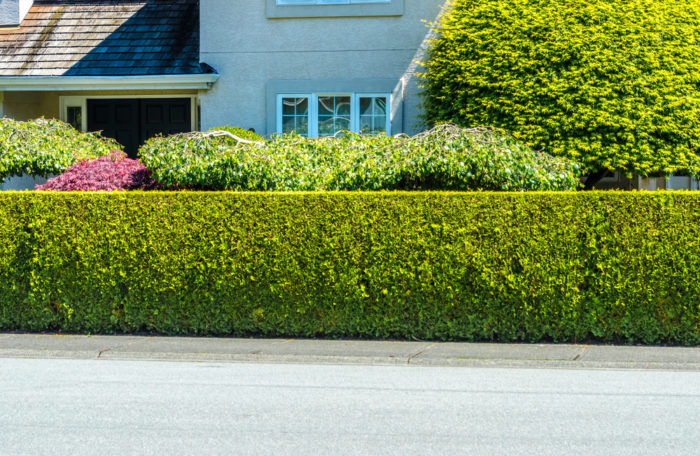
Every kind of hedge will need trimming, but some more than others (like leylandii). How will you manage that? Do you have the tools, like motorised hedge trimmers or cordless trimmers, adjustable platforms and PPE, to carry maintenance out safely?
Cost: The bigger the plant, the higher the initial outlay. Waiting for smaller plants to fill out can be frustrating, but that’s why fast-growing hedges for privacy are generally so popular. Weigh up your budget against your desperate desire to never see Bob from next door barbecuing topless again.
Evergreen vs. deciduous: Evergreen hedges will give you a year-round barrier from noise, wind and view. If you just want hedges for privacy during summer (when neighbours are more likely to be out and about), a deciduous hedge might be an option. Of course, deciduous hedges will still provide a bit of cover even when their leaves have fallen, but they’ll allow more light to pass through in the gloomier winter months.
Available light: Is your hedge going in a shady corner, or will it be catching full-sun all day? Maybe half and half? Before choosing your hedge, track how much sun it will be dealing with, so you can pick a variety that will thrive. You don’t want your hedge to end up sparse and scorched, or stunted from lack of light. For shady spots, cherry laurel, holly and privet cope best.
Final height: Some types of hedges can provide metres of vertical coverage, while others are more suited to shorter, thicker shapes. Factor in the proportions of the space you’re hoping to fill when choosing hedges for privacy.
What are the laws about garden hedges?
We’ve all heard a tale of neighbours falling out, and one household responding with a “spite fence”: a wall, fence or hedge that’s deliberately positioned to annoy the other party. Spite fences might be used to block light, restrict access or completely obscure a previously stunning view. It’s the height (pun intended) of pettiness, but some of the stories are pretty entertaining.
Part 8 of the Anti-Social Behaviour Act 2003 covers high hedges in England and Wales. It applies to hedges made mostly of evergreen or semi-evergreen plants that are over 2 metres tall and block light or access. If a neighbour finds that “reasonable enjoyment of [their] property is being adversely affected” and you cannot agree, they can complain to the council. The council can then order you to cut the hedge down and keep it at a set height. There is no general legal limit on hedge height, but keeping a boundary hedge at about 2m avoids most disputes. So keep those hedges well-trimmed!
When you’re planning to put fences around your home, it’s a good idea to have a friendly conversation with any neighbours sharing those boundaries. You can listen to any of their concerns and reassure them about maintenance to keep the peace moving forward. After all, unless there’s an additional fence on their side, you’ll suddenly be dropping a bit more garden maintenance on their lap.
Frequently asked questions
What is the fastest-growing hedge for privacy in the UK?
Leylandii is the fastest, growing up to 90cm a year. Cherry laurel, photinia Red Robin, griselinia and privet all grow 30 to 60cm a year and are easier to keep under control.
What is the best low maintenance hedge for the front of a house?
Griselinia, holly and privet are good choices. Griselinia and holly only need trimming once a year, and privet takes well to a neat, formal shape.
What are the best fast-growing screening plants?
Cherry laurel, leylandii, photinia Red Robin and griselinia all make fast evergreen screens. Clumping bamboo is a good option for narrow spaces.
How far apart should I plant hedging plants?
Plant most hedging about 45 to 60cm apart in a single row. For a faster, thicker screen, plant a staggered double row with the plants about 40cm apart.
When is the best time to plant a hedge?
October to March is best, while plants are dormant. Pot-grown hedging can be planted all year if you keep it well watered.
How tall can a garden hedge be in the UK?
There is no fixed legal limit, but under the Anti-Social Behaviour Act 2003, councils can act on complaints about evergreen hedges over 2 metres that affect a neighbour’s light or enjoyment of their property.
Hopefully this post has shown you some of the best fast-growing hedges for privacy and quiet in your garden. May you never have to see or hear your neighbours outside again!

Save this pin for later

Share this article

Kirsteen is a professional writer who traded a tiny garden for an even smaller balcony when she moved to Brighton in 2015. Her interest in gardening stems from a keen desire to turn her simple slab of concrete into a lush urban oasis, complete with cosy-but-practical garden furniture and delicious edible plants.